

Double, double oil and trouble
“Double, double oil and trouble; Fire burn and cauldron bubble.”
- Apologies to William Shakespeare.
Our planet runs on oil. When supplies are choked off, trouble ensues.
In WW2, the rising Japanese empire found its oil supplies embargoed by the United States. That led to Japan seizing oil resources in the Dutch East Indies and Pearl Harbor. Germany was also short of oil and attempted to seize the Middle East oilfields until foiled by the British in Africa
The Strait of Hormuz sees 20% of world oil consumption pass through it daily (Britannica) – about 20 million barrels per day. Canada produces approximately 5 million barrels per day (Govt Canada), which means approximately four Canadas’ worth of oil moves through this narrow channel on any given day.
Canada is the fourth largest oil producer in the world. Not insignificant by any means, but it gives perspective on how reliant the world is on oil from this one part of the world.
The Strait of Hormuz has been blocked since February 28th. About 7 million barrels have managed to divert through overland pipelines leaving 13 million barrels of oil per day lost due to the blockade. Almost three Canadas’ worth.
Oil prices briefly surged to US $113 on April 7th but fell back as Iran and the U.S. agreed to negotiations. Despite these negotiations going nowhere, the oil market believes peace will succeed. How do we know this?
Oil for delivery today costs over US $91 per barrel (April 22) but oil priced for delivery in November costs just US $76.80 (oilprice.com). That’s good news if you can wait six months for your oil. The problem? The world can’t.
While gasoline prices have moved up, we have yet to see shortages at the pump. Some grades, like diesel, have been hit harder. My home diesel heating bill jumped 50% from January.
Losing three Canadas’ worth of oil every day will start to bite in mid-May.
According to Eric Nuttall, a leading oil analyst at Ninepoint Partners, it takes 75-90 days for an oil tanker to make a round trip from the Middle East: load, sail, unload, and return. The last tankers that left on February 28th from the Strait of Hormuz will arrive in China on May 1st (Al Jazeera). This means May is when oil-importing countries begin to run dry.
There are 147 tankers trapped. Even if they all leave tomorrow, it will be at least 40 days before they deliver their oil. The world knows a shortage is coming but hasn’t truly felt the impact of empty tankers yet.
Cracking Up
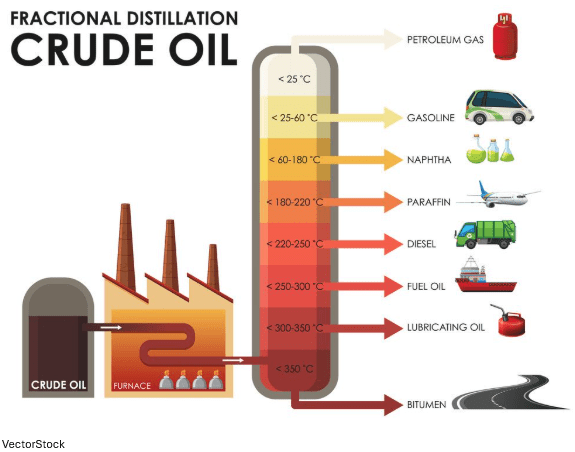
Oil is “cracked” into the various blends shown above. The lightest blend is gasoline for cars and the heaviest blends are used for roads and ship bunker oil.
More commonly known as kerosene, jet fuel is highly regulated in terms of purity and mix. Jet fuel is also a product of ‘heavier’ crude, like that from the Canadian oil sands. It is a narrow blend in the middle between gasoline and diesel.
The U.S. is now the world’s largest producer of oil, but shale oil is extremely light. Less jet fuel and diesel can be squeezed from it. Because gasoline and diesel are more widely used – and more refineries are calibrated to make them - jet fuel runs out first.
WestJet has announced flight cancellations for the summer. Lufthansa just cancelled 20,000 flights. Travel could be seriously interrupted this summer as a result.
Don’t Stop
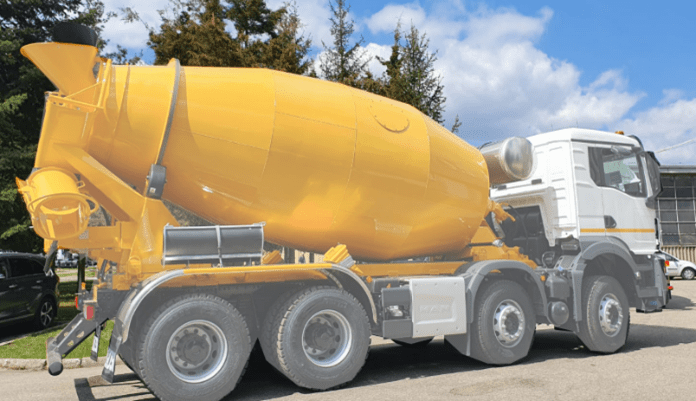
Cement mixers are one thing you don’t want to turn off - bad things happen when cement stops moving.
Same thing for oil wells. Water builds up and corrodes pipes if it sits for too long. Water also blocks the movement of oil from the rock pores below, meaning wells that are shut down can be ruined forever.
Wells in Saudi Arabia, UAE and Iran are being turned off now because storage is full and there is nowhere for it to go.
It is not just oil that is in trouble. Sulfur, fertilizer, helium, and food are all products from this area of the world. Farmers need fertilizer and modern medicine needs helium for MRI machines. We have some in reserve, and countries like Canada are racing to open new fertilizer mines (Jansen in 2027) and new helium deposits. But these take years.
Shortages of many other things are appearing. India is seeing a shortage of Diet Coke because of a shortage of aluminum cans from the Gulf (Reuters). Expect more unusual gaps in supply lines.
Are oil companies drilling frantically to fill the gap? No, and why would they? Every other oil crisis has seen oil prices plummet after the bombs stop, leaving bills for new rigs unpaid. Don’t expect new oil supplies to appear until oil futures – prices a year or more forward - rise.
The Air Bubble
In medical dramas where the hero is lying unconscious in a hospital bed, a common threat is to show an air bubble in the intravenous tube keeping him or her alive.
Air bubbles are very bad in medical tubes.
The lost oil barrels are the air bubble in the world’s medical tube. This gap of empty tankers that shows up in May could send oil prices even higher as buyers scramble to find any drop of oil they can. Countries are releasing oil from their reserves, and producers like Canada are increasing where they can, but Canada’s 140,000 barrels/day increase is nothing in a 13 million barrel/day shortfall.
Winners and Losers
As morally wrong as this war may be, it is creating winners as well as losers. Over 75 facilities in the Middle East outside Iran have been damaged and need repair. This doesn’t include the billions needed to eventually rebuild Iran.
Iron ore (steel), fertilizer, and sulfur producers in Canada and Australia, for example, benefit from these shortages. We own a few in our Dividend Value portfolios.
The biggest winner may be energy itself because many producers are not priced for the new reality.
The “floor” for oil prices used to be around $60-65 per barrel, until February:
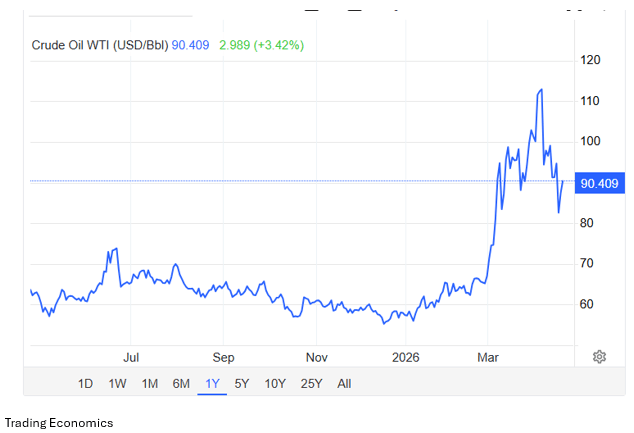
Now, add $10-20 for political risk, longer shipping distances for more remote oil, shortages while facilities are rebuilt, tolls on waterways, and refilling of strategic petroleum reserves that are being drained.
If $80 per barrel is the new floor, most Canadian oil producers can almost mint money. Even with no new pipelines. Our oil analyst is adjusting his prices higher to account for what is happening. Ask for it if you’d like to see it.
“Pursue peace. Prepare for war.”
John F. Kennedy
Watch oil in May.
Tax Time
With no major tax changes, tax preparation was relatively uneventful this year. If you have issues, please let us know. We are always striving to improve what information we send out and when, even as we are at the mercy of those providing information to us.
And Canada Post. Everyone is at their mercy.
If electronic delivery will help you next year, call us and ask how we can set this up for you.
Paul Siluch, Portfolio Manager
Dividend Value Partners