

Bigger Isn’t Always Better
Wikimedia
Written by Paul Siluch
October 16, 2026
Large families were once the norm. Four kids, six kids, even eight. More was better.
Status mattered. So did cheap farm labour, religion, early marriage and the absence of reliable birth control. Big families needed big houses.
Maybe not quite as big as Craigdarroch Castle.
Built for the Dunsmuir family, the castle was meant to hold eight daughters and two sons. It cost $500,000 in 1890, roughly $18 million in today's dollars, and came with 37 rooms, 17 fireplaces and a tower. Subtle it was not.
The Dunsmuirs were once the richest family in British Columbia. Their fortune, built from Vancouver Island coal, was worth the equivalent of about $537 million today. Then came a useful reminder that making a fortune and keeping one are two different skills: estate battles helped dissipate much of it within three generations.
Craigdarroch survived. The family fortune largely didn't.
Big Families Built Big Houses
When economies grow and families expand, houses tend to expand with them. Victoria's oldest neighbourhoods are full of enormous heritage homes that eventually became triplexes, apartments, offices or museums.
The house can outlive the lifestyle it was built for.
Which raises a question we hear surprisingly often from clients:
Who Will Buy My House?

Getty images 499845953
That is becoming a very good question, especially for Baby Boomers.
Boomers, born between 1946 and 1964, grew up during an extraordinary period of rising incomes, expanding suburbs and steadily larger houses. As they prospered, many traded up. Then traded up again. The trophy home became proof that you had made it.
For decades, the math encouraged it. Housing seemed to rise almost every year, and in Canada, the principal residence exemption made gains on a qualifying home especially attractive. A bigger house was not just somewhere to live. It became a savings account with a kitchen.
But demographics eventually collect their bill.
This year, the oldest Boomers turn 80. According to 2024 American Community Survey data cited in the original draft, home ownership begins to decline around this stage of life. People hang on to their homes through their 70s, then death, retirement living or the sheer annoyance of maintaining four bathrooms starts to change the equation.
Two Waves, One Housing Market
Two big waves are now arriving at the same time.
The first is supply.
An estimate cited by Realtor.com suggests almost 14 million Boomer-owned homes in the U.S. could come to market over the next decade. If Canada experiences a similar demographic pattern, we could see 1.4 million homes added to the market over the next 10 years.
The direction is obvious even if the math is a guess: a lot of older homeowners will be selling at roughly the same time.
For perspective, the original draft notes about 133,000 homes were listed for sale across Canada in December 2025. The supply of Baby Boomer houses could reach 140,000 per year, potentially swamping the market.
The second wave is demand.
More accurately, the lack of demand for the kind of house Boomers often own.
Where Did All the Children Go?
Almost everything that once pushed families toward six or eight children has reversed:
- Childhood survival is vastly better. Families no longer have children as insurance against high childhood mortality. The era of “an heir and a few spares” is over.
- Religion plays a smaller role in family size for many households.
- Farm and low-cost family labour matter far less in a service and automated economy.
- Marriage and parenthood happen later.
- Reliable birth control is widely available.
The result? Smaller families across much of the developed world.
And here is the problem for the 4,000-square-foot house with five bedrooms, three floors and a formal dining room that’s used twice a year:
Today's buyers do not need it. Most do not want it. And plenty cannot afford it.
The Mansion Problem
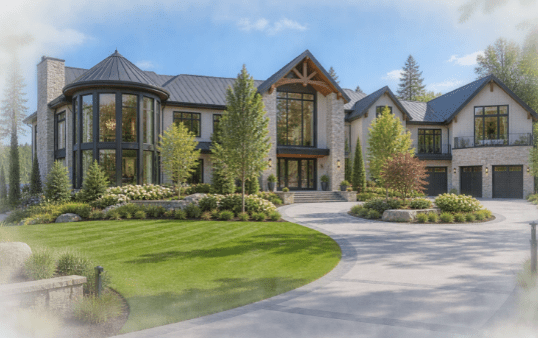
AI generated
The original research cited in this newsletter estimates roughly one-third of the Boomer homes coming to market will be large homes, defined as 4,000 square feet or more.
That is where the demographic squeeze could be greatest: more big houses for sale, fewer big families to fill them, and fewer buyers with the income to carry the mortgage, property tax, heating bill, roof, yard and everything else that comes with owning a small hotel.
The house that was a status symbol in 1995 could become a liquidity problem in 2030.
Small May Be the New Big
The reverse may also be true.
Smaller homes, starter homes, ranchers and one-level retirement homes appeal to two groups at once: younger families trying to get into the market and older homeowners trying to simplify their lives.
We already see this in Victoria. Clients searching for good one-level retirement homes can watch a new listing disappear almost immediately.
That is what happens when two demographic groups want the same house.
So What?
If you own a very large home and have already been thinking about downsizing, demographics provide one more reason not to wait forever.
The next decade could bring a growing supply of big houses built for yesterday's families into a market increasingly dominated by smaller households with tighter budgets.
That does not mean every mansion will collapse in value. Location, land, quality and local supply still matter enormously. But, if all else is equal, the biggest homes may face the strongest demographic headwind.
Eventually, we will reach peak Boomer selling. The original draft points to roughly 2036 as the key period to watch.
Until then, one thought is worth keeping in mind:
Don't be the last one out the door.
If You Really Want to Stay…
Having said all this, Canada’s population continues to expand. Demand for homes is at a low, not a high; time and inflation generally push real estate prices higher. It may be a matter of waiting the glut out.
What can you do if you want to stay in your home?
- Since the Covid epidemic, many seniors who faced being locked down inside retirement homes decided to stay put and have care come to the house. This can be an expensive option, but if you can afford it, find a way to have food and care services come to your home.
- Renovate to live on one floor. In a previous letter, I mentioned the rise in bathroom renovations to replace a bathtub with a walk-in seated shower. Moving laundry facilities to the main floor is another way to extend your time in your home.
- Robots. Yes, I said robots. I am beginning to see autonomous lawn mowers more frequently because they have gotten much better. Using advanced GPS and laser sighting technologies, it is now possible to outsource one of your biggest yard jobs to a machine that does it automatically, as often as you like. Robot vacuums had a false-start with the Roomba (which went bankrupt and is now flourishing as a China-owned company), but the technology has advanced such that we are now seeing:
- pool robots for underwater scrubbing
- vacuuming and wet scrubbing of floors
- home security robots
- window cleaners
- robot pet companions (these are very popular in Japan)
- the very first cooking and food preparation robots
And don’t forget about self-driving. One of the biggest reasons people sell their homes is because they can no longer drive. A number of cities in the U.S. now allow full self-driving taxi services (Waymo and Robotaxi) and some electric car companies already do 90% of the driving for you.
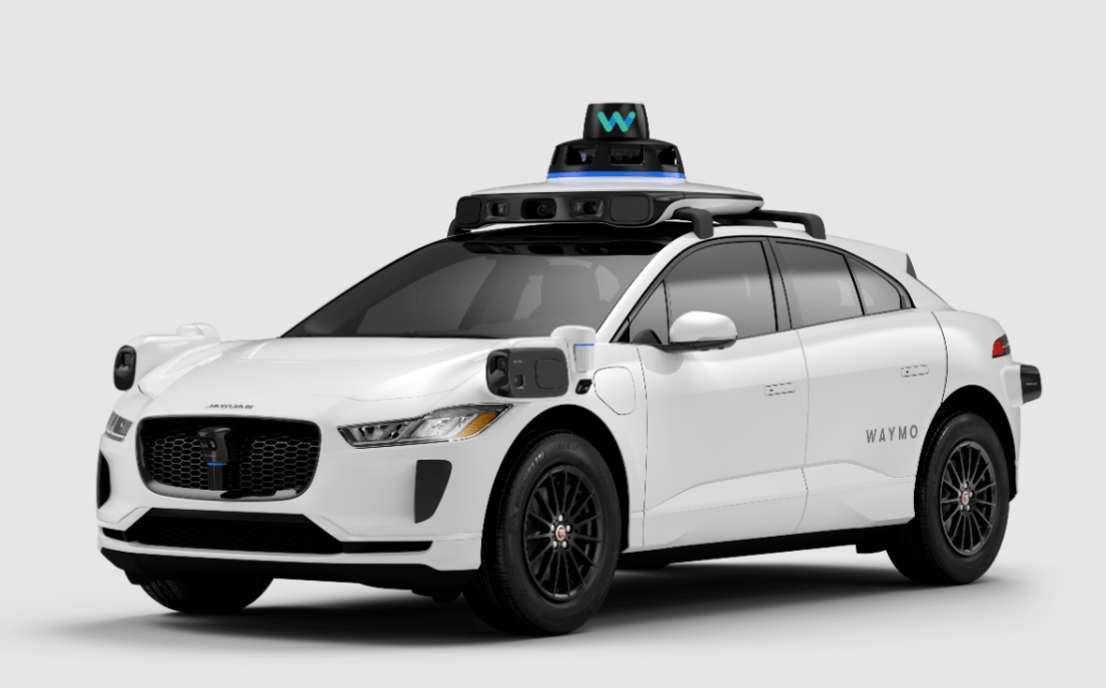
Source: Waymo
Seniors, children, and people with disabilities may soon be liberated from needing a driver's licence to travel independently.
If you are determined to stay in your home, technology may help you do exactly that.
Just be prepared to have a dozen more remotes to program!