

Visa
Written by Paul Siluch
November 14th, 2025

History’s first loan is believed to have occurred in Mesopotamia around 3000-4000 BCE, when farmers borrowed seeds to plant their crop. As repayment, they promised a portion of their harvest in the fall. It became so common that the Sumerian word “mas” – which meant both ‘interest’ and ‘calf’ – came to reference loans repaid by livestock.
Over the years, granaries became both storage facilities and banks lending seed for the next year’s crop. Gold and silver evolved as the intermediary currency – seeds rot and are a clumsy form of permanent value – and the Egyptians introduced letters of credit, tying the metals to the loan to codify the transaction.
The Babylonian Code of Hammurabi in 1754 BCE capped the rate of interest on gold and silver loans at 33%. What a deal.

In their empires, the Greeks and Romans introduced pawnbrokers, which expanded borrowing further. These middlemen took other assets – collateral – to secure a loan of gold or silver. Modern banks still require similar collateralization when they lend today.
Borrowing grew rapidly after 1500, during the Renaissance. Banking families like the Medicis extended credit all over the known world. The Bank of England introduced paper notes in 1694, copying the idea from the Chinese. Credit grew further because paper notes could be exchanged easily and everywhere.
The next rise in credit happened after WWII, when rising consumer spending spurred mortgages and car loans. But the real explosion happened in the 1950s with the birth of the credit card, a concept which revolutionized short-term borrowing. Credit cards offer a form of a non-ending bank loan if you pay within 30 days.
(Data above sourced from A brief history of lending through the ages by Chrissy Kapralos)
Human civilization grew the credit system. Or grew because of the credit system. It is hard to separate humanity’s progress from borrowing, as they go hand in hand over the millennia. Our desire for things now seems to be wired into our genes.
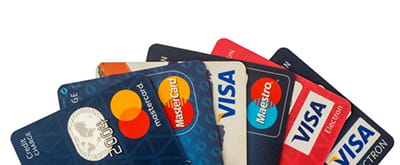
The giants behind ‘plastic’ were Visa – founded in 1958 as BankAmericard – and Mastercard, which was born in 1966 as Master Charge. At one time, these were non-profit collectives owned and operated by the banks. Banks made their money on overdue interest but with over 9,000 banks in the U.S. just 30 years ago, it meant there were hundreds of separate cards issued and state lines to trip over. MasterCard became a public company in 2006 through an initial public offering (IPO). In 2008, Visa transitioned from a bank-owned cooperative, consolidated its global subsidiaries, and launched its own IPO, becoming a publicly traded company.
It was the largest IPO in U.S. history. Its profitability was the reason. Visa doesn’t make money off interest charges – that is still reserved for the banks that issue the cards and are on the hook for any bad debts – but on the transaction fees instead.
Every time you tap that card, a fee ranging from 1.25% to 3% gets paid to Visa or Mastercard for the privilege of using their secure, global, high-speed networks. They are the train networks of the finance world. Their rails go everywhere.
Visa has been challenged many times.
- When the economy softens, borrowing slows. That hurts. But in hard times, people often get cut off by banks and rely on credit cards for essentials. They never go away.
- Debit cards became a thing for a time, which were like instant digital withdrawals from your bank. No borrowing needed, if you have cash in the bank.
- Electronic payments arrived with the internet, bypassing traditional credit cards.
What did Visa do? It introduced the Visa Debit card and pushed banks to once again use their “digital rails.” Visa is currently the largest debit card issuer in the U.S. (Business Research Company) and is now introducing the Flexible Credential card. This combination will offer both credit and debit in one, making their card even more convenient.
To counter electronic payments (EFT - Electronic Funds Transfer), Visa again reformed its networks. It operates seamlessly throughout 130 countries, which allowed it to outmuscle most direct EFT providers.
The biggest threat to Visa and Mastercard, however, is the same one that lenders have faced since Sumerian times.
Government.
While Hammurabi capped loan interest at 33%, credit cards are not that far behind, with average rates around 23% (WalletHub). But it is the transaction fees that rankle the regulators. And merchants.
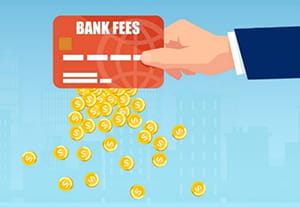
A standard credit card charges the merchant about 1.25% for the privilege of settling instantly from its credit-charging customers. However, it is the new premium cards that are loaded with loyalty programs and travel points that have merchants up in arms about. Some of these cards charge as much as 3% with each transaction – a fee that is often the entire profit margin of the retailer.
Visa and Mastercard settled the first $6 billion lawsuit in 2012 and agreed to allow merchants to charge more on premium card purchases.
Last week, Visa and Mastercard settled a second antitrust settlement – the largest in U.S. history. The $38 billion agreement will see Visa lower its transaction fees by 0.1% and allow merchants to opt out of allowing the most expensive cards to be used.

The market expected worse. Visa stock barely budged on the news.
The 0.1% can be easily recouped through cost savings elsewhere. And while Visa may face lower transaction fees, people continue to charge more on their cards every year – we have become a cashless society after all, and it is not due to crypto. It is credit cards.
In Canada, new coin production at the Canadian Mint peaked at over 2 billion coins in 2006 and has fallen to just 351 million coins in 2022. Cash only accounts for about 15% of in-person purchases now, compared to 30% in 2009 (data from Bank of Canada Method of Payments survey).
And since the wealthiest people use premium cards the most, retailers are likely to be loath to stop these buyers from using the cards they pull out to swipe with.
In future, the next big challenge will be stablecoins, which are digital currencies that can be transferred with the tap of a finger on a phone. No credit card networks needed.
To no one’s surprise, Visa plans to be the intermediary between traditional banks and stablecoins, and have already adapted their networks to allow these cryptocurrencies. Visa can facilitate transactions between any paper currency to stablecoins over their ultra-secure network, something the new blockchains cannot yet do easily. Visa has already processed over $140 billion in crypto and stablecoin transactions since 2020. This part of their business quadrupled in just the last year (Blockonomi).
Visa shares have returned just 5% before dividends this year, which is a poor year for the company. The giant antitrust lawsuit has hung over the company for several years, but with it now out of the way, the company can focus on growth instead of courtrooms.
Credit and borrowing have a distinct place in human culture. And Visa remains at the heart of it.
Visa shares are owned in the Dividend Value portfolio.